


A sample of A Kid's Guide To Life
A Kid’s Guide to Life
Michelle Herman
Foreword by Grace Jane Luttrull
Thought Catalog Books
thoughtcatalog.com
Copyright © 2026 Michelle Herman.
All rights reserved. No part of this book may be reproduced or transmitted in any form or any means, electronic or mechanical, without prior written consent and permission from Thought Catalog.
Published by Thought Catalog Books®, an imprint of Thought Catalog, a digital magazine owned and operated by The Thought & Expression Co. Inc., an independent media organization founded in 2010 and based in the United States of America. For stocking inquiries, contact stockists@shopcatalog.com.
Produced by Chris Lavergne and Noelle Beams
Designed and Illustrated by KJ Parish
Circulation management by Isidoros Karamitopoulos
thoughtcatalog.com | shopcatalog.com
First Edition, Limited Edition Print
Printed in the United States of America
ISBN 978-1-965820-29-2
For Grace,
then and now.
Foreword
Hello. I have to tell you something about this book.
My name is Grace, and I’m a grownup now, but a long time ago I was eight-and-a-half years old, and I was curled up in my mother’s bed while she read me Little Women. I was the sort of child who worried a lot. Are you like that? Maybe you are, and that’s why you’re reading this book. Or maybe you’re not, and you’re reading it for fun, or out of curiosity, or because someone you love gave it to you as a gift. Either way, I bet you have lots of questions about life, because everyone does.
Little Women is a long book, and in it, a lot of time passes. The sisters go through years and seasons and birthdays and funerals and heartaches and holidays. One Christmas, the girls’ mother gifts them “guides to life,” which they can read in order to learn about how they should live. A guide to life! As an eight-and-a-half-year-old with a lot of questions, I was delighted, and also very jealous.
“I want one,” I told my mother.
Luckily for me, my mother was a professional writer. And very smart. And had already learned a lot about life.
A few months later, she presented me with a guide to life all my own: she’d written it herself, and bound the pages by hand with thread. I treasured it.
And I grew up.
Many years later, I was eighteen years old, and I still lived in the same house with my mother, the professional writer, and my father, the professional artist, and I found the Guide to Life on my bookshelf. I hadn’t forgotten about it—not really—but I hadn’t looked at it in years. I read it all, and then my mother read it all, and we were moved and pleased to discover that all these years later, the advice was still very good, and smart, and helpful.
“Other people would want this,” I told her then.
And that’s how you ended up with this book, which is bound with—I actually have no idea what it’s bound with, but it isn’t embroidery thread—and it became a guide for other people, not just me, which is wonderful, because I am the only one who’s me and you are the only one who’s you.
After that, I grew up some more.
I’m thirty-two years old now, and I live in a different state from my mother and father, but I still have a lot of questions about life. (Yes, you always will.) I am old enough to give my own advice, but still young enough to need it. That’s the funny thing about growing up: you never finish doing it.
This book is special. It talks about me when I was a child, and my mother when she was a child, and my grandmother when she was a child, and also all sorts of other kids, both real and imaginary, and also you. Treat it with care. Agree and disagree and laugh and ask more questions.
The best thing you can do for yourself—this is my advice now!—is to always wonder, and to never know.
—Grace Jane Luttrull, November 2025
Introduction
Let’s get this out of the way right now: No one, not even your parents (and no, not even the author of this book), can tell you how to live your life.
Your parents, along with other adults—your grandparents, godparents, aunts and uncles, teachers, and others (yes, including this author)—can give you useful advice and tell you what helped them in their lives, but in the end everybody figures out “how to live” all by themself.
Still: There are some things—some important, basic, fundamental, unchanging things—that a wiser, older person with more life experience can tell you, and that will help you as you begin to figure out the answer to this question for yourself.
That is what this book is meant to do.
Its author wrote the first version of it many years ago, as a gift for her daughter when she was a child. Her daughter, not even nine years old, had requested it (you can find the full account of this in the “acknowledgments” section at the back of this book). Ten years later, reading over that original version, both its author and her by-then college-bound daughter were glad to see that all the advice still held up—that as much as the world changes, some things remain true. And so a version of the Guide was published—one that was meant for all girls, not just the author’s daughter.
This version of the Guide has more anecdotes (little stories) in it, covers more ground, and expands on some of the original Guide’s ideas. And it is meant for everyone. Both the author and her by-now fully grown-up daughter—who is now a psychotherapist—felt this was as important as any of the advice within it.
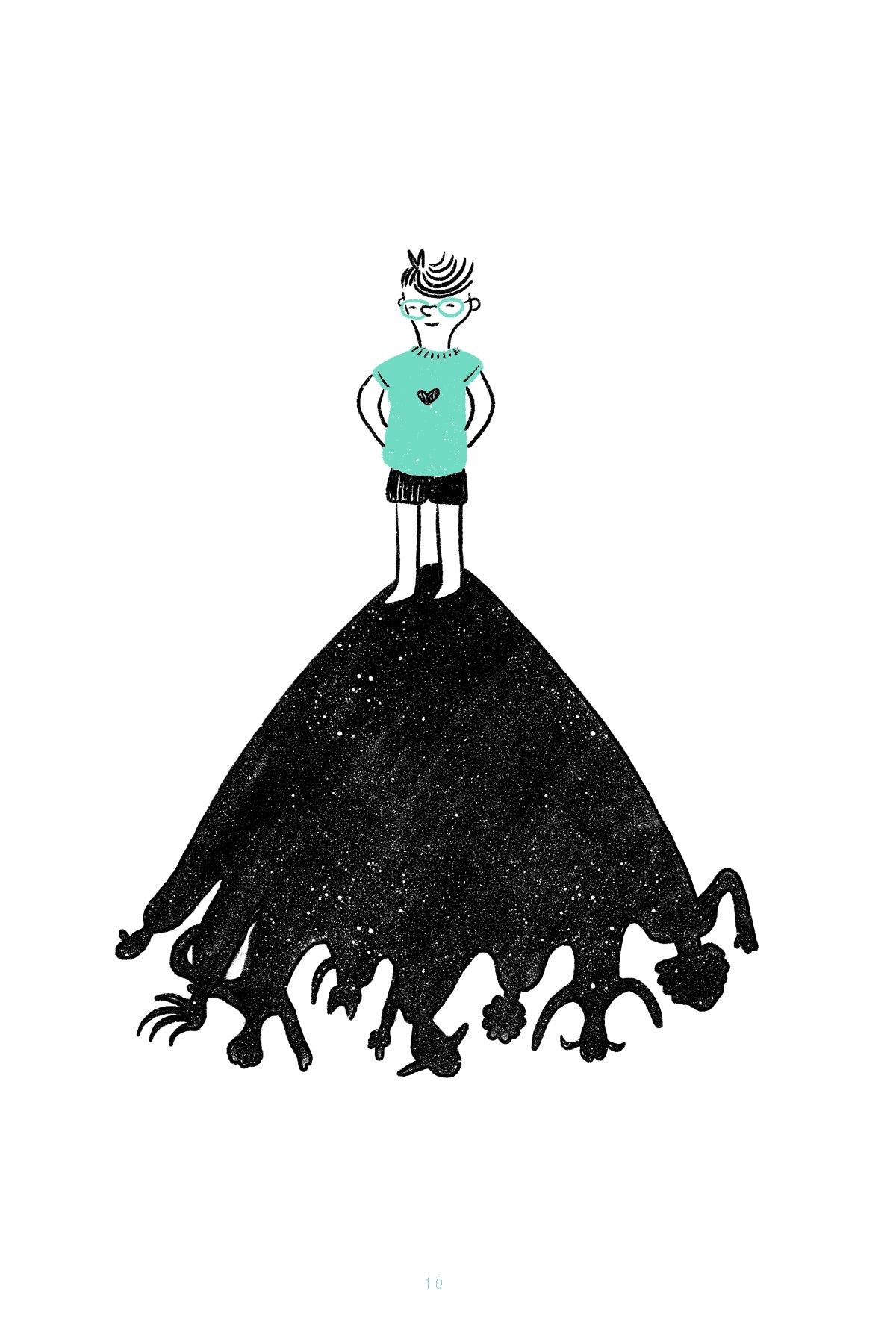
Chapter One: The Golden Rule
Do the right thing.
This probably seems pretty obvious to you. Why would anyone choose to do—why would anyone want to do—the wrong thing? The trouble is that sometimes it’s hard to tell what the right thing is.
So here’s a thought worth keeping in mind about doing the right thing: Every philosophy and religion in the world includes some version of “the golden rule”—Do unto others as you would have others do unto you—as part of its
[The supplied sample ends here, mid-sentence.]
Back to book options